

A lineup that moves from classic form to new-school rupture – and makes room for new sounds
There are music festivals that are assembled, and then there are festivals that feel argued into existence. South Side Story belongs to the second kind. When Red FM brings it to Delhi on 29 and 30 August, the point is not simply to stage a concert; it is to place southern music, food and culture at the center of the city’s attention and ask it to stay there. This year’s lineup does exactly that, moving with intent from legacy to experiment, from the familiar to the still-forming.
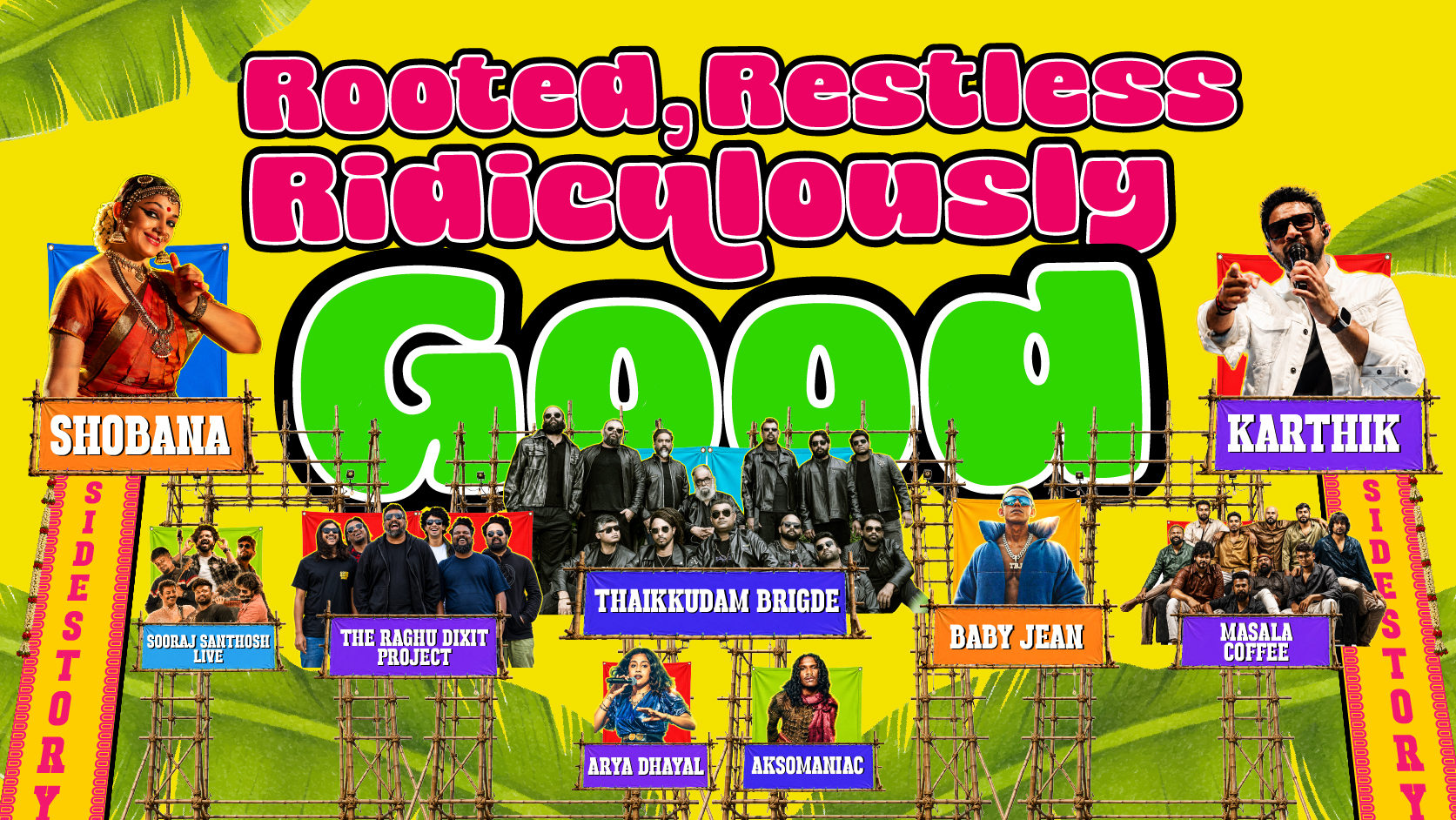
What’s particularly exciting is the range of voices they bring together. Classical icons share space with contemporary disruptors. Folk influences meet rock sensibilities. Cinema favourites stand alongside independent artists carving out entirely new sonic identities.
At one end of the spectrum is Shobana, one of India’s most celebrated Bharatanatyam exponents. Her presence is a reminder that South Indian culture is not merely heard, it is seen, felt and embodied. Through movement, expression and storytelling, she brings centuries of artistic tradition to the stage while making it feel remarkably alive in the present.
Then there is Karthik, a voice that has accompanied generations of listeners across languages and film industries. Few artists move as effortlessly between technical brilliance and emotional intimacy. Whether performing a chart-topping film song or a quieter melody, Karthik brings a sense of familiarity that instantly connects audiences across age groups.
The Raghu Dixit Project arrives with something equally valuable: the ability to bridge worlds. Their music draws from folk traditions while embracing contemporary sounds, creating performances that feel both rooted and expansive. They represent a version of Indian music that refuses to choose between heritage and experimentation.
Thaikkudam Bridge and Masala Coffee continue that conversation in different ways. Both bands have built devoted followings by taking regional sounds beyond regional boundaries. Their music celebrates local identity while speaking a language that audiences everywhere can understand – energy, rhythm and storytelling.
For audiences discovering newer voices, artists such as Arya Dhayal, Sooraj Santhosh and Baby Jean offer a glimpse into the future of South Indian music. They represent a generation unafraid to move across genres, platforms and audiences while remaining deeply connected to where they come from. Among the festival’s most intriguing performers is Aksomaniac, who will be making his SouthSide Story debut. Known for blending R&B, electronic influences and deeply personal storytelling, he represents a growing wave of independent artists reshaping the sound of contemporary South India.
Taken together, these artists tell a larger story. South Indian culture today is not defined by a single language, genre or tradition. It is classical and contemporary. Cinematic and independent. Familiar and constantly evolving.
That is what makes South Side Story more than a music festival. It is an opportunity to experience the many voices of the South in one place and to witness how tradition continues to inspire new forms of creativity.
Southern culture is not a niche to be sampled politely at the edge of the city. It is a living force, broad enough to hold grace and grit, melody and noise, intimacy and spectacle. In a city as diverse as Delhi, that conversation feels especially meaningful.